


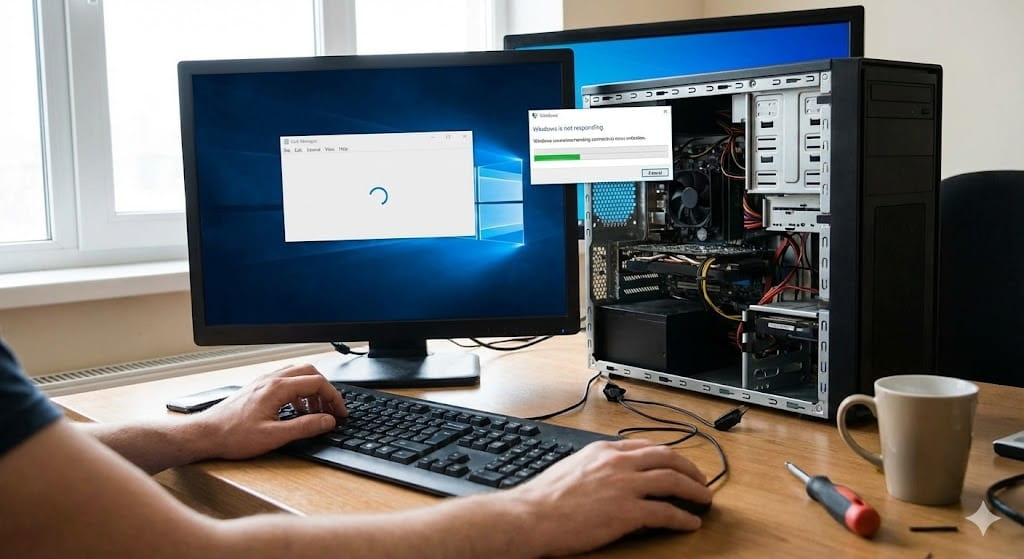
Computer freezing randomly in Windows, Windows freezing fix, PC freezes randomly Windows 10 and Windows 11, computer freezing troubleshooting, Windows system freeze causes, and how to fix random PC freezing are among the most searched technical problems by Windows users. A computer freeze can happen unexpectedly, causing the screen to stop responding, the mouse to become stuck, and applications to crash without warning. This issue disrupts productivity, gaming performance, and daily computer usage.
Random Windows freezing can occur due to hardware limitations, outdated drivers, overheating, corrupted system files, or software conflicts. The good news is that most freezing problems can be fixed without replacing your computer or performing complex repairs. This comprehensive step-by-step guide explains why Windows computers freeze randomly, how to diagnose the cause, and proven methods to fix system freezing permanently.
Understanding Why Computers Freeze Randomly
Computer freezing occurs when the operating system fails to process tasks properly. When system resources become overloaded or software conflicts arise, Windows may stop responding temporarily or completely.
What Happens During a Computer Freeze
- System stops processing commands
- Mouse and keyboard become unresponsive
- Applications stop working
- Screen may lock or display loading symbol
- System may require forced restart
Common Signs of Random Computer Freezing
Recognizing the symptoms helps identify the root cause faster.
Symptoms of Windows Freezing Issues
- Mouse cursor stops moving
- Keyboard commands do not respond
- Programs stop working suddenly
- System becomes extremely slow
- Screen locks while using applications
- PC freezes during gaming or multitasking
Main Causes of Computer Freezing in Windows
| Cause | Description | Severity |
|---|---|---|
| Overheating | High CPU or GPU temperature | High |
| Insufficient RAM | Memory overload during multitasking | Medium |
| Outdated Drivers | Hardware communication failure | Medium |
| Corrupted System Files | Windows malfunction | High |
| Malware or Viruses | System resource hijacking | High |
| Hard Drive Problems | Storage failure or bad sectors | High |
| Software Conflicts | Incompatible applications | Medium |
Step-by-Step Guide to Fix Computer Freezing Randomly in Windows
Step 1: Restart Your Computer
Restarting your computer is often the quickest fix.
Why Restarting Helps
- Clears temporary system errors
- Stops background conflicts
- Frees RAM memory
- Resets system processes
Step 2: Check CPU and GPU Temperature
Overheating is one of the most common causes of random freezing.
How Overheating Causes Freezing
- CPU throttles performance
- GPU stops responding
- System forces freeze to prevent damage
Safe Temperature Levels
| Component | Safe Temperature |
|---|---|
| CPU Idle | 30°C – 50°C |
| CPU Under Load | 60°C – 85°C |
| GPU Idle | 30°C – 55°C |
| GPU Under Load | 65°C – 85°C |
How to Reduce Overheating
- Clean dust from fans
- Improve airflow
- Use cooling pad for laptops
- Replace thermal paste (advanced users)
Step 3: Close Background Applications
Too many running applications overload system memory.
How to Close Programs Using Task Manager
- Press Ctrl + Shift + Esc
- Open Task Manager
- Check CPU and Memory usage
- End unnecessary tasks
Step 4: Update Windows Operating System
Windows updates fix system bugs and improve stability.
Why Updates Fix Freezing Issues
- Patch system vulnerabilities
- Improve hardware compatibility
- Fix memory leaks
How to Update Windows
- Settings → Windows Update → Check for Updates
Step 5: Update Device Drivers
Outdated or corrupted drivers cause hardware communication errors.
Important Drivers to Update
- Graphics drivers
- Chipset drivers
- Storage drivers
- Network drivers
How to Update Drivers
- Open Device Manager
- Right-click device
- Select Update Driver
Step 6: Check Hard Drive Health
Storage failure is a major reason for system freezing.
Signs of Hard Drive Problems
- Slow file access
- Clicking sounds
- System freezing during file operations
Run Disk Error Check
- Open Command Prompt as administrator
- Type:
chkdsk /f /r
- Restart computer
Step 7: Run System File Checker (SFC Scan)
Corrupted system files cause Windows to freeze.
How to Run SFC Scan
- Open Command Prompt as administrator
- Enter command:
sfc /scannow
- Wait for scan to complete
Step 8: Check RAM Usage and Errors
Insufficient or faulty RAM causes freezing during multitasking.
How to Test RAM
- Press Windows + R
- Type mdsched.exe
- Restart and scan memory
Step 9: Scan for Malware and Viruses
Malicious software can consume system resources.
Signs Malware Causes Freezing
- Sudden system slowdowns
- Unknown programs running
- Browser redirections
- High CPU usage
Run full system antivirus scan.
Step 10: Disable Startup Programs
Too many startup applications slow Windows boot and cause freezing.
How to Disable Startup Apps
- Open Task Manager
- Go to Startup tab
- Disable unnecessary apps
Step 11: Adjust Virtual Memory (Page File)
Low virtual memory leads to freezing.
How to Increase Virtual Memory
- Open Advanced System Settings
- Performance → Settings → Advanced
- Virtual Memory → Change
Set custom size based on RAM capacity.
Step 12: Uninstall Problematic Software
Recently installed applications may cause system instability.
Software That Often Causes Freezing
- Overclocking tools
- Third-party antivirus programs
- Gaming overlays
- System optimization tools
Step 13: Check Power Supply Stability
Insufficient power delivery causes system crashes.
Signs of Power Supply Problems
- PC freezes during gaming
- Random restarts
- Hardware not detected
Step 14: Perform Clean Boot
Clean boot helps identify software conflicts.
How to Perform Clean Boot
- Open System Configuration
- Disable non-Microsoft services
- Restart computer
Step 15: Reset Windows (Last Resort)
Resetting Windows removes severe system corruption.
Windows Reset Options
- Keep personal files
- Remove everything
Windows 10 vs Windows 11 Freezing Issues
| Feature | Windows 10 | Windows 11 |
|---|---|---|
| System Optimization | Stable | Newer but heavier |
| Hardware Requirements | Lower | Higher |
| Driver Compatibility | Mature | Still improving |
Hardware Components That Commonly Cause Freezing
Graphics Card Problems
- Outdated drivers
- Overheating GPU
- Insufficient VRAM
Storage Issues
- Old HDD drives
- SSD firmware errors
- Bad sectors
RAM Problems
- Faulty memory sticks
- Insufficient memory capacity
Advanced Troubleshooting Methods
Use Reliability Monitor
Reliability Monitor shows crash history and system errors.
Check Event Viewer Logs
Event Viewer helps identify system failures and hardware issues.
Estimated Hardware Upgrade Costs
| Upgrade Type | Estimated Cost |
|---|---|
| RAM Upgrade | $40 – $150 |
| SSD Upgrade | $60 – $200 |
| CPU Cooling System | $30 – $120 |
| Power Supply Replacement | $70 – $180 |
Preventive Tips to Avoid Computer Freezing
Daily PC Maintenance Checklist
- Update Windows regularly
- Keep drivers updated
- Avoid installing unknown software
- Clean computer dust periodically
- Monitor system temperature
How Gaming and Heavy Software Cause Freezing
Modern games and editing software consume large system resources. Systems with low RAM or outdated GPUs freeze frequently during heavy workloads.
How Storage Type Affects Freezing Performance
HDD vs SSD Performance Comparison
| Storage Type | Speed | Freeze Risk |
|---|---|---|
| HDD | Slow | High |
| SSD | Fast | Low |
Upgrading to SSD significantly reduces freezing problems.
Future Windows Stability Improvements
Microsoft continues improving system stability using:
- AI-based performance optimization
- Improved memory management
- Better driver integration
- Enhanced hardware monitoring
How User Habits Affect System Stability
Habits That Increase Freezing Risk
- Installing too many programs
- Ignoring Windows updates
- Using cracked software
- Running heavy applications on low-spec computers
Conclusion
Experiencing computer freezing randomly in Windows can be frustrating and disruptive. However, most freezing issues occur due to overheating, outdated drivers, insufficient RAM, corrupted system files, or malware infections. By following structured troubleshooting steps such as updating Windows, checking hardware temperature, scanning for malware, and optimizing system settings, most freezing problems can be resolved effectively.
If freezing continues after troubleshooting, hardware upgrades such as installing SSD storage or increasing RAM can dramatically improve system performance. Regular maintenance, proper cooling, and safe software installation habits help maintain long-term Windows stability.
Frequently Asked Questions (FAQ)
Why does my computer freeze randomly?
Random freezing usually occurs due to overheating, outdated drivers, insufficient RAM, or corrupted system files.
Can overheating cause Windows to freeze?
Yes. High CPU or GPU temperatures force system shutdown or freezing to prevent hardware damage.
Does upgrading RAM fix freezing problems?
Yes. Increasing RAM improves multitasking performance and reduces freezing.
Is SSD better than HDD for preventing freezing?
Yes. SSD drives are faster and more reliable, significantly reducing freezing issues.
Should I reinstall Windows if my PC keeps freezing?
Reinstalling Windows helps if freezing is caused by severe software corruption.
Can viruses cause computer freezing?
Yes. Malware consumes system resources and may cause frequent system freezes.