


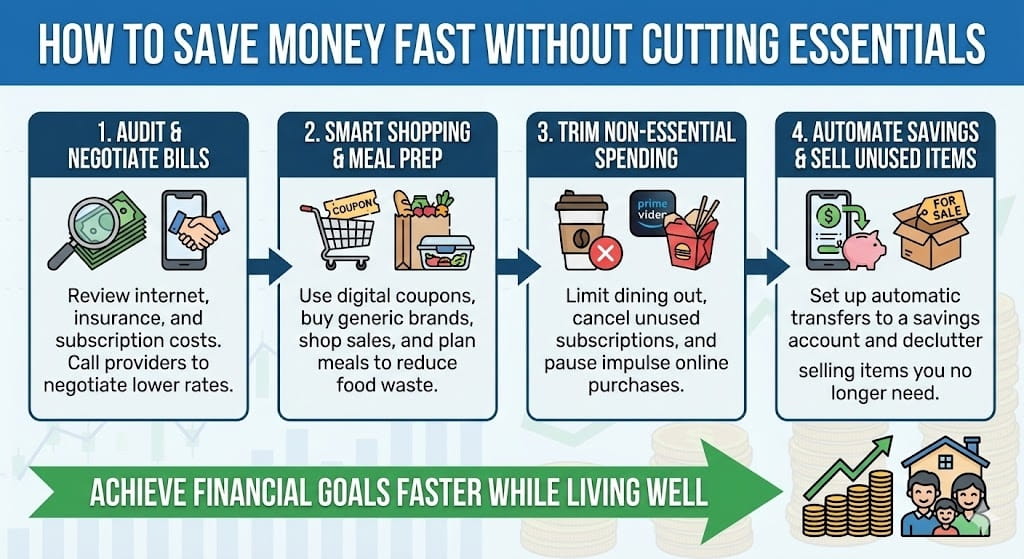
How to save money fast without cutting essentials, fast money-saving strategies, budget-friendly saving tips, smart ways to reduce expenses without sacrificing needs, and practical financial survival techniques are among the most searched personal finance topics today. Many people want to increase savings quickly, but they fear sacrificing basic needs such as housing, food, healthcare, and transportation. Fortunately, learning how to save money fast without cutting essentials allows individuals to improve financial stability while maintaining a comfortable lifestyle.
Saving money does not always mean making extreme sacrifices or living uncomfortably. Instead, it focuses on optimizing spending habits, eliminating wasteful expenses, and maximizing income efficiency. By applying structured financial strategies, anyone can build savings quickly while still covering essential living costs.
This comprehensive guide explains step-by-step saving techniques, practical budgeting strategies, expense optimization methods, lifestyle adjustments, and expert financial tips to help you save money quickly without compromising essential needs.
Understanding Essentials vs Non-Essentials
Before learning how to save money effectively, it is important to distinguish between essential and non-essential expenses.
Essential Expenses
Essential expenses are necessary for daily survival and basic living standards.
- Housing (rent or mortgage)
- Utilities (electricity, water, heating)
- Groceries and basic food
- Healthcare and medications
- Transportation for work or school
- Insurance coverage
- Childcare and education
Non-Essential Expenses
Non-essential expenses are optional and often easier to reduce.
- Entertainment subscriptions
- Dining out frequently
- Luxury shopping
- Premium services
- Impulse purchases
- Expensive hobbies
Why Saving Money Quickly Is Important
Saving money fast can protect individuals during financial emergencies and support long-term financial goals.
Benefits of Fast Saving
- Builds emergency financial protection
- Reduces financial stress
- Supports debt repayment
- Helps achieve personal financial goals
- Improves long-term financial stability
Step-by-Step Guide to Saving Money Fast Without Cutting Essentials
Step 1: Analyze Your Current Financial Situation
Understanding income and expenses is the foundation of successful saving.
How to Analyze Your Finances
- Calculate total monthly income
- Track all expenses for one month
- Identify unnecessary spending patterns
- Compare income versus expenses
Financial Overview Table Example
| Category | Monthly Amount |
|---|---|
| Income | $3,000 |
| Essential Expenses | $1,900 |
| Non-Essential Expenses | $600 |
| Potential Savings | $500 |
Step 2: Eliminate Wasteful Spending Without Affecting Essentials
Reducing unnecessary spending creates immediate savings opportunities.
Practical Waste Reduction Strategies
- Cancel unused subscriptions
- Limit online impulse shopping
- Avoid premium service upgrades
- Compare prices before purchasing
- Reduce entertainment spending
Step 3: Reduce Bills Without Cutting Essential Services
Instead of eliminating essentials, reduce their cost through optimization.
How to Lower Monthly Bills
- Negotiate internet and phone plans
- Switch energy providers
- Use energy-efficient appliances
- Reduce electricity usage
- Monitor water consumption
Monthly Bill Reduction Potential
| Bill Type | Average Savings Potential |
|---|---|
| Internet and Phone | 10% – 25% |
| Electricity | 15% – 30% |
| Insurance | 10% – 20% |
| Streaming Services | 20% – 50% |
Step 4: Optimize Grocery Spending Without Reducing Nutrition
Food is an essential expense, but smart shopping significantly reduces costs.
Smart Grocery Saving Tips
- Create weekly meal plans
- Buy store-brand products
- Purchase bulk items when cheaper
- Avoid shopping while hungry
- Use discount coupons and store rewards
- Freeze unused food
Step 5: Use Transportation More Efficiently
Transportation costs can be optimized without eliminating travel.
Transportation Saving Methods
- Use public transportation
- Carpool with coworkers
- Maintain vehicle regularly
- Combine errands into one trip
- Compare fuel prices
Step 6: Automate Savings Transfers
Automatic savings ensures consistency and discipline.
How to Automate Savings
- Set automatic bank transfers
- Schedule transfers on payday
- Create separate savings accounts
- Use round-up saving features
Step 7: Use Cashback and Reward Programs
Reward programs generate savings without reducing essential purchases.
Popular Reward Methods
- Cashback credit cards
- Store loyalty programs
- Online shopping cashback platforms
- Travel reward programs
Step 8: Lower Housing Costs Without Moving
Housing is the largest expense for most individuals.
Housing Cost Optimization
- Negotiate rent with landlord
- Share housing with roommate
- Reduce energy consumption
- Refinance mortgage if possible
Step 9: Reduce Insurance Costs Without Losing Coverage
Insurance remains essential but can be optimized.
Insurance Saving Tips
- Compare insurance providers annually
- Bundle insurance policies
- Increase deductibles if affordable
- Maintain good credit score
Step 10: Increase Income Alongside Saving
Saving money becomes easier when income increases.
Quick Income Boost Ideas
- Freelance services
- Selling unused items
- Online micro-jobs
- Part-time remote work
- Skill-based side hustles
Fast Saving Budget Strategy
50/30/20 Modified Saving Rule
| Category | Percentage |
|---|---|
| Essentials | 50% |
| Lifestyle | 20% |
| Savings and Debt | 30% |
Increasing savings percentage helps accelerate financial growth.
High-Impact Money Saving Techniques
Fast Financial Improvement Methods
- Track daily spending
- Use cash spending limits
- Cancel automatic subscription renewals
- Delay major purchases for 30 days
- Set weekly spending caps
Common Hidden Expenses That Reduce Savings
Many people overlook hidden expenses.
Hidden Spending Examples
- Subscription auto-renewals
- Bank service fees
- Late payment penalties
- Delivery and convenience fees
- Unused memberships
Monthly Expense Reduction Comparison
| Expense Category | Typical Monthly Cost | Optimized Cost |
|---|---|---|
| Dining Out | $300 | $120 |
| Subscriptions | $100 | $40 |
| Electricity | $180 | $130 |
| Transportation | $250 | $180 |
Psychological Strategies That Help Save Money Faster
Saving money involves behavioral changes as well as financial planning.
Money-Saving Mindset Techniques
- Focus on long-term goals
- Avoid emotional spending
- Track progress visually
- Celebrate savings milestones
- Build financial discipline gradually
How Technology Helps Save Money Faster
Useful Financial Tools
- Budget tracking apps
- Automatic savings apps
- Expense monitoring software
- Digital coupon platforms
Best Budgeting Apps for Fast Savings
| App | Main Features |
|---|---|
| Mint | Expense tracking and alerts |
| YNAB | Goal-focused budgeting |
| PocketGuard | Spending limit monitoring |
| Goodbudget | Envelope budgeting system |
Emergency Fund Importance When Saving Fast
Emergency funds prevent savings from being disrupted during financial crises.
Recommended Emergency Savings
| Income Stability | Suggested Emergency Fund |
|---|---|
| Stable Income | 3 months expenses |
| Freelancers | 6 months expenses |
| Unstable Income | 9 months expenses |
Common Mistakes When Trying to Save Money Fast
- Cutting essential needs completely
- Setting unrealistic savings goals
- Ignoring small daily expenses
- Failing to track spending
- Saving inconsistently
How Lifestyle Choices Affect Saving Speed
Lifestyle Factors
- Spending habits
- Social influences
- Shopping behavior
- Financial discipline
- Income stability
Advanced Money Saving Strategies
Pro Saving Techniques
- Negotiate service contracts
- Switch to energy-efficient appliances
- Use prepaid service plans
- Track price trends before purchasing
- Invest savings into low-risk financial products
Long-Term Financial Benefits of Fast Saving
Saving money quickly improves overall financial health.
Long-Term Advantages
- Reduced financial anxiety
- Strong emergency protection
- Debt-free lifestyle
- Investment opportunities
- Early retirement potential
Estimated Savings Growth Timeline
| Saving Consistency | Financial Progress |
|---|---|
| 3 Months | Expense awareness improves |
| 6 Months | Noticeable savings growth |
| 12 Months | Strong financial stability |
| 3+ Years | Long-term wealth development |
Signs Your Saving Strategy Is Working
- Monthly savings increase
- Reduced unnecessary spending
- Improved financial confidence
- Less reliance on credit
- Faster debt repayment
When You Should Adjust Your Saving Plan
Adjust your saving plan if:
- Income changes significantly
- Major life events occur
- Essential expenses increase
- Financial goals change
Future Trends in Smart Money Saving
Technology continues transforming financial management.
Emerging Saving Trends
- AI-powered budgeting assistants
- Automated expense categorization
- Real-time saving recommendations
- Personalized financial coaching
Conclusion
Learning how to save money fast without cutting essentials helps individuals achieve financial stability while maintaining comfortable living standards. By optimizing expenses, improving budgeting habits, reducing wasteful spending, and increasing income opportunities, anyone can build savings quickly without sacrificing basic needs.
Consistent financial discipline, smart spending decisions, and strategic planning allow individuals to reach financial goals faster and build long-term financial security.
Frequently Asked Questions (FAQ)
Can I save money fast without reducing essential expenses?
Yes. Optimizing spending, reducing waste, and improving budgeting habits allow fast savings without cutting essential needs.
What is the fastest way to save money?
Tracking expenses, reducing non-essential spending, automating savings, and increasing income are the fastest saving methods.
How much money should I save monthly?
Financial experts recommend saving at least 20% of income, but any consistent savings amount helps improve financial stability.
Are budgeting apps helpful for saving money?
Yes. Budgeting apps improve expense tracking, automate savings, and help maintain financial discipline.
Should I focus on saving or paying debt first?
High-interest debt should usually be prioritized, but building small emergency savings simultaneously is recommended.
How long does it take to build strong savings?
With consistent budgeting and spending control, noticeable savings growth usually occurs within 3 to 6 months.